
Testing furniture before production protects your project from expensive surprises during fabrication and installation. You catch fit, comfort, and structural problems while changes still cost very little. Testing furniture early turns risky assumptions into proven decisions before anyone cuts material.
Skipping validation feels faster, yet it often hides costly flaws until the worst moment. You discover those flaws on the floor, in the field, or in front of clients. Early validation keeps small issues small and protects your budget, timeline, and reputation.
Why Does Testing Furniture Before Production Save Time and Money?
Testing furniture before production catches design flaws while fixes remain simple and inexpensive. You avoid tooling changes, remakes, and delayed installs that drain both time and money. Prototypes, mockups, and lab tests then confirm the design before full fabrication begins.
How Testing Furniture Reveals Problems Early
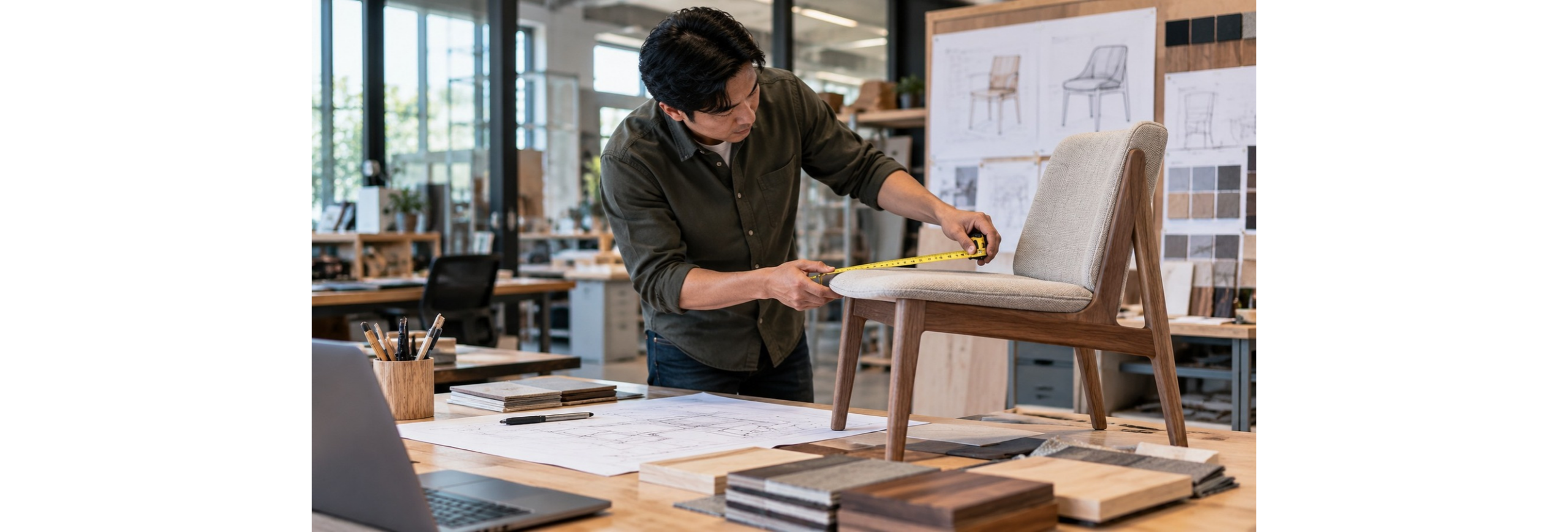
Testing furniture early exposes issues that drawings and specifications alone often miss completely. You feel a chair’s comfort, check a joint’s strength, and see true proportions. A rendering can hide the small flaws that a physical sample reveals instantly.
The cost of fixing a problem climbs sharply as a project moves toward production. According to NASA, a fix at the build phase can cost up to sixteen times an early-stage fix. Early testing therefore moves discovery to the cheapest possible point in the timeline.
Physical review also surfaces ergonomic problems that only appear when someone actually sits down. You protect users when you confirm comfort and safety long before mass production.
Testing furniture also aligns everyone, since the whole team reacts to a real object. Architects, clients, and fabricators agree faster when they share the same tangible reference. Our SketchUp renderings and design services help you validate ideas visually from the start.
Prototypes, Mockups, and Digital Validation Methods
Testing furniture spans several methods, from quick digital models to full physical prototypes. You choose the method based on risk, budget, and the questions you must answer. Each layer of validation removes uncertainty before you commit to a full run.
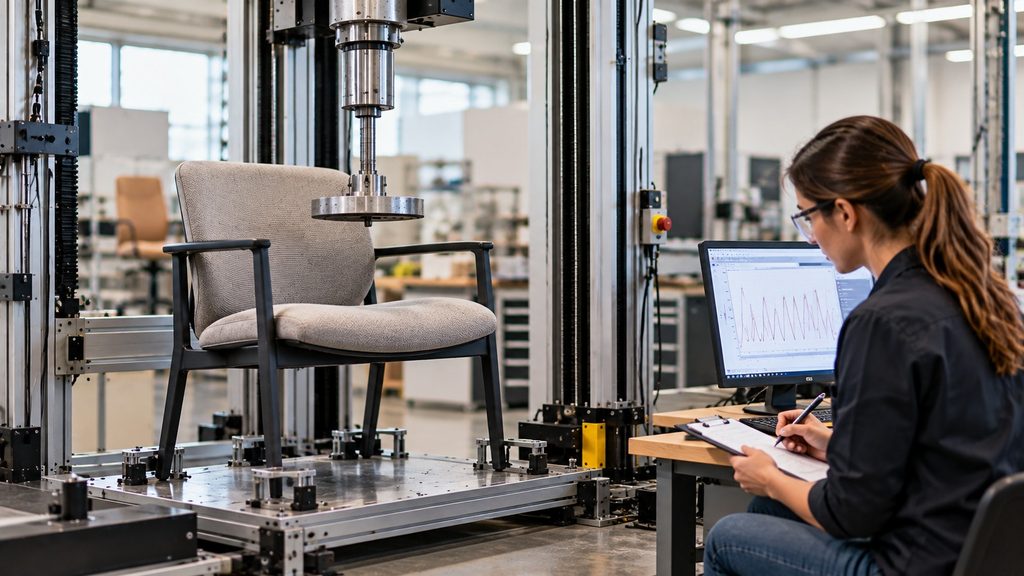
Digital models catch clashes early, while physical prototypes confirm comfort, scale, and finish. Lab testing then measures durability against standards from the Business and Institutional Furniture Manufacturers Association (BIFMA). According to Micom Laboratories, the BIFMA X5.1 chair standard includes twenty separate tests.
Testing furniture through these layers gives you real evidence, not just optimistic assumptions. You match each test to the stakes, so validation stays proportionate and affordable.
- Build digital models to catch clashes, dimensions, and interface issues early
- Produce material and finish samples to confirm color, texture, and durability
- Create full-scale mockups to test comfort, ergonomics, and real proportions
- Run lab tests to verify strength, stability, and long-term wear
- Gather staff and client feedback before you approve final fabrication
Smart teams also sequence these methods, so cheap checks happen before expensive ones. Our design and fabrication process builds validation into every stage of a project. You avoid guesswork when testing happens all through design rather than after production.
How Testing Furniture Protects Budgets and Schedules
Testing furniture protects budgets because early fixes cost a fraction of late ones. You avoid remaking finished pieces, rebooking installers, and explaining delays to frustrated clients. A single overlooked detail can ripple into weeks of costly schedule slippage later.
Schedules stay intact when you resolve issues before fabrication locks in the design. You keep installation crews and site milestones on track across the whole project. Predictable delivery also strengthens trust with developers, contractors, and your end clients alike.
Testing furniture also reduces waste, since you build the right piece the first time. You spend material and labor once, not twice, on every custom furniture component.
Coordination with millwork also matters, since built-in pieces must fit the surrounding construction. Reading our guide on commercial millwork shows how early coordination prevents costly conflicts. Early validation keeps both furniture and millwork moving together toward one clean install.
Reducing Rework, Delays, and Change Orders
Rework quietly destroys margins, since every remake repeats labor, material, and shipping costs. You cut change orders when the approved sample already reflects the final product. Learning how we handle custom office furniture shows our validation-first habits in action.
Start Testing Furniture Early With DTANK+
Testing furniture before production turns risk into certainty and protects your time and money. You catch problems while they stay cheap, small, and simple to correct fully. Every custom project benefits from validation built into its very earliest design stages.
You deserve a partner who tests, refines, and proves designs before building them. Our team unites design, engineering, fabrication, and testing under one accountable, in-house roof. Talk with our team today to test your next design before production begins.
Written in partnership with Tom White