
Urban routes have become the toughest testing ground for beverage distributors trying to protect margins and service windows. Narrow streets, restricted loading zones, and rising congestion push operators to rethink the vehicles they send downtown daily. Smaller beverage trucks are quickly becoming the preferred answer for operators serving dense metro accounts across North America.
Fleet managers are discovering that oversized units cost more time than they save in cargo capacity per stop. Right-sizing the truck to the route unlocks faster stops, easier parking, and better driver retention long-term. Buck’s Trucks helps operators match under-CDL and compact bay-body units to the exact demands of city delivery lanes.
Why Do Smaller Beverage Trucks Work Better in Cities?
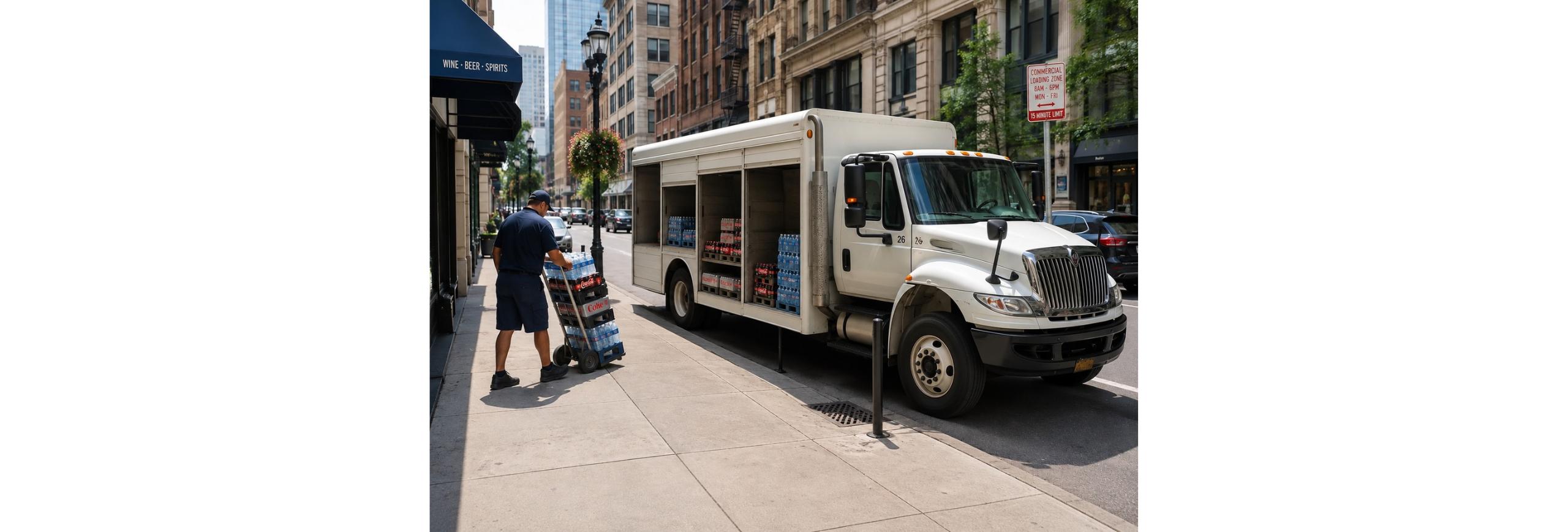
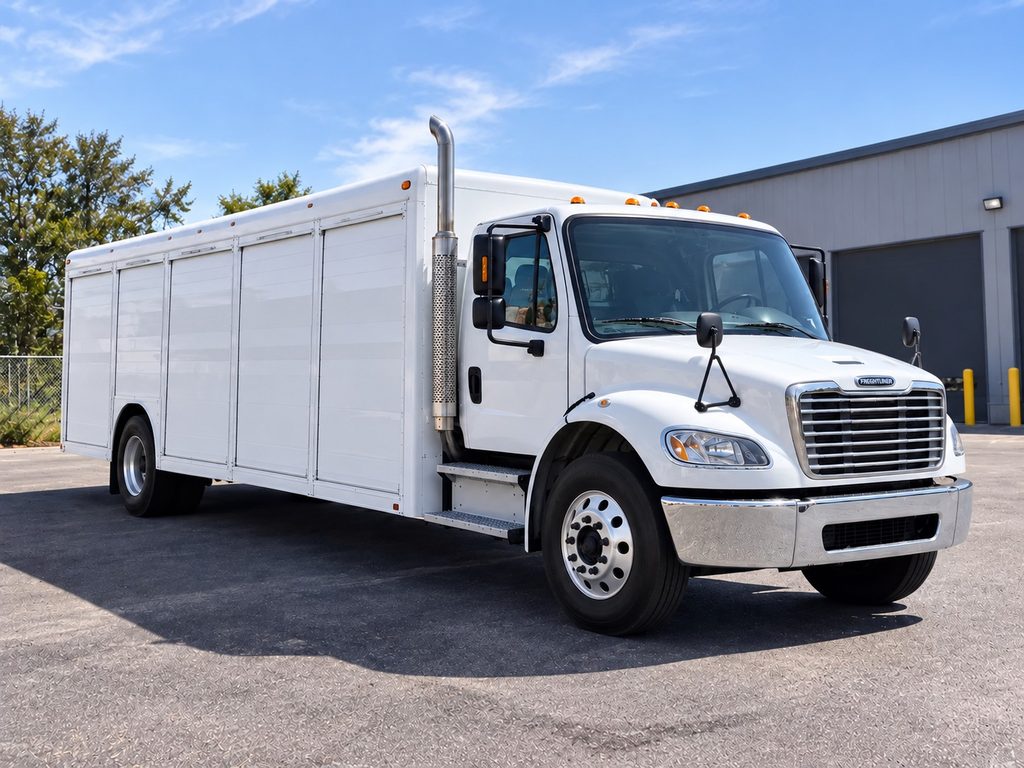
Smaller beverage trucks navigate tight urban corridors, fit into shorter loading zones, and reduce turning-radius conflicts at every stop. They also open the driver pool to non-CDL candidates when spec’d under 26,000 pounds gross vehicle weight. Faster curbside access means more completed stops per shift and lower fuel burn across dense metro routes.
The Urban Congestion Problem Reshaping Beverage Delivery Choices
City traffic has grown into a measurable drag on every beverage delivery operation running downtown accounts. According to Retail TouchPoints research on urban logistics, drivers in Chicago lose an average of 155 hours per year to traffic delays. Smaller beverage trucks handle these conditions with greater agility than traditional heavy-duty configurations.
Loading zones in most downtowns were designed decades before modern delivery volumes reached today’s scale. Consequently, oversized units often circle blocks searching for space while smaller trucks slide into standard curb cuts. Every minute lost hunting for parking translates directly into missed stops and driver overtime.
Additionally, tighter emissions rules in metro zones are pushing operators toward compact units with cleaner engine profiles. Municipal restrictions on truck size during peak hours further limit where full-size beverage rigs can operate. You can review current inventory options that fit under-CDL and mid-size categories built for urban work.
Buck’s Trucks stocks compact bay-body configurations that thread through downtown grids while carrying meaningful case counts per route. Matching the truck to the terrain remains the fastest path to reclaiming hours lost in city traffic.
How Smaller Beverage Trucks Boost Route Productivity and Driver Access
Route productivity climbs when drivers spend less time parking, maneuvering, and walking product to distant retailer entrances. Smaller beverage trucks slot into standard commercial loading zones without requiring double-parking or extended curb blocks. Additionally, tighter turning radius allows drivers to complete stops other units simply cannot reach.
Expanding Your Driver Pool With Under-CDL Configurations
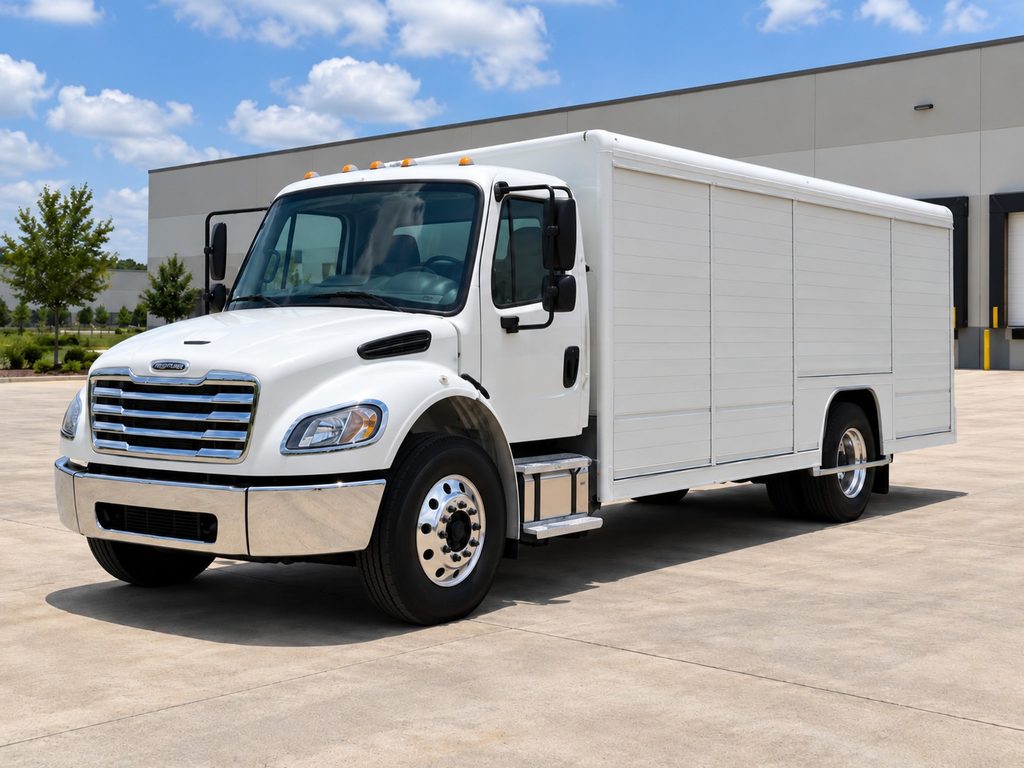
Driver shortages continue to strain beverage fleets, particularly in metro markets where competition for licensed drivers intensifies. Spec’ing trucks under the 26,000-pound gross vehicle weight (GVW) threshold removes the Commercial Driver’s License (CDL) barrier entirely. In addition, non-CDL positions typically fill faster and reduce training lead times before new hires reach revenue routes.
Consider these advantages when evaluating smaller beverage trucks for your metro delivery operation:
- Under-CDL GVW ratings widen the applicant pool beyond traditional trucking candidates
- Compact 4-bay to 10-bay bodies fit standard curb cuts without special permitting
- Lower cab heights reduce driver fatigue during high-frequency stop routes
- Tighter wheelbases handle alley access, parking decks, and low-clearance dock zones
Smaller trucks also reduce insurance exposure since incident severity typically drops with vehicle size. Consult our refurbishment services page for options that restore compact units to yard-ready condition at lower capital cost.
Buck’s Trucks works with operators sourcing under-CDL units across every major beverage body layout stocked today. The right configuration multiplies driver availability while raising daily stops completed per route.
Cost, Emissions, and Fleet Flexibility Advantages
Smaller beverage trucks reduce operating costs across fuel, maintenance, insurance, and driver acquisition categories combined. According to U.S. Environmental Protection Agency emissions data cited in recent logistics research, medium and heavy-duty trucks account for 23% of total transportation-related emissions despite representing only 6% of the fleet. Downsizing where routes allow shrinks that footprint measurably.
Compact units also give fleet managers more flexibility to reassign trucks between routes as demand shifts. A smaller truck can cover an urban route Monday and handle suburban backhaul work Tuesday without operational strain. Moreover, refurbished compact units offer lower entry costs than new heavy-duty replacements for fleets watching capital budgets.
Warranty protection matters when introducing new equipment classes into an existing beverage fleet mix. Review our warranty coverage details to understand how trade-term protections shield your first compact unit purchases. Explore our blog archive for related guidance on fleet expansion and equipment lifecycle planning.
Buck’s Trucks supplies operators sourcing smaller beverage trucks for urban routes, seasonal expansion, or driver-pool broadening initiatives. The right compact unit turns downtown routes from a cost center into a productivity gain.
Ready to Right-Size Your Urban Beverage Fleet?
Compact beverage trucks solve congestion, curb access, and driver shortage problems that oversized units cannot address. Under-CDL configurations, tighter bay layouts, and refurbished compact options all extend fleet reach into markets previously considered unreachable. Buck’s Trucks brings 25 years of beverage-specific sourcing experience to every urban fleet conversation.
Your metro routes deserve equipment engineered for the streets they actually run each day. Whether you need a single compact unit for a test route or a multi-truck downtown refresh, our team can help. Get in touch with our specialists today to explore compact truck options built for city delivery success.
Written in partnership with Tom White