
A tornado warning leaves little time for confusion, so your crew must know exactly where to go. Strong programs for tornado safety in the workplace depend on drills that build muscle memory before storms arrive. However, many drills stop at a headcount and miss the details that slow real responses.
You can change that by treating each drill as a measured test of people, routes, and shelters. A well-led drill exposes bottlenecks, clarifies roles, and builds confidence across every crew and shift. Follow the steps below to plan, run, and improve drills that prepare your team for real storms.
Plan Your Drill Around Tornado Safety in the Workplace
Planning starts with your written emergency action plan, which defines alerts, routes, roles, and accountability methods. According to the Occupational Safety and Health Administration (OSHA), employers must review the plan with employees whenever it changes. A scheduled drill shows whether that written plan works under realistic jobsite conditions and time pressure.
Strong tornado safety in the workplace also depends on shelters that crews can reach within minutes. Therefore, map every work zone and identify the nearest certified shelter for each crew.
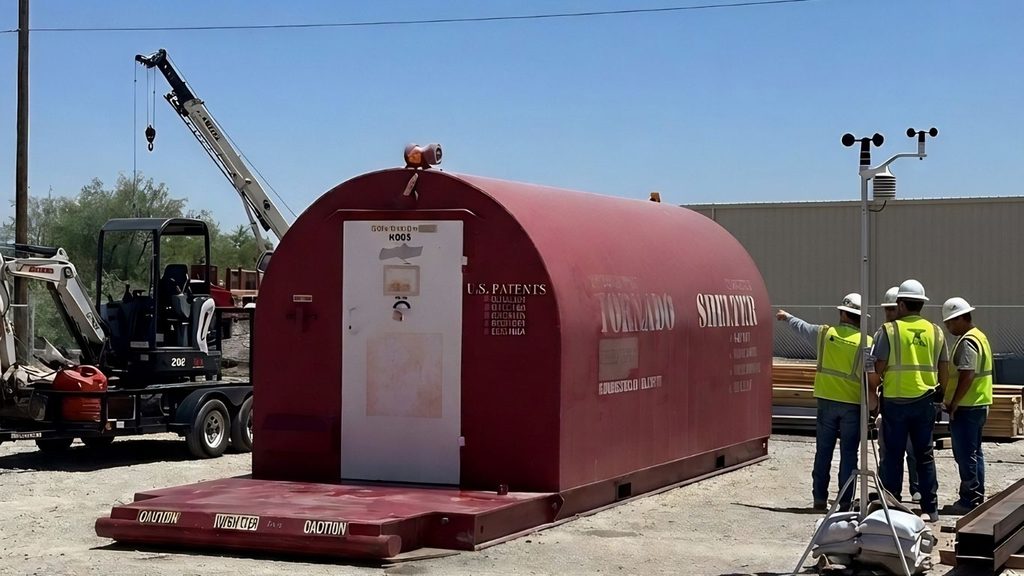
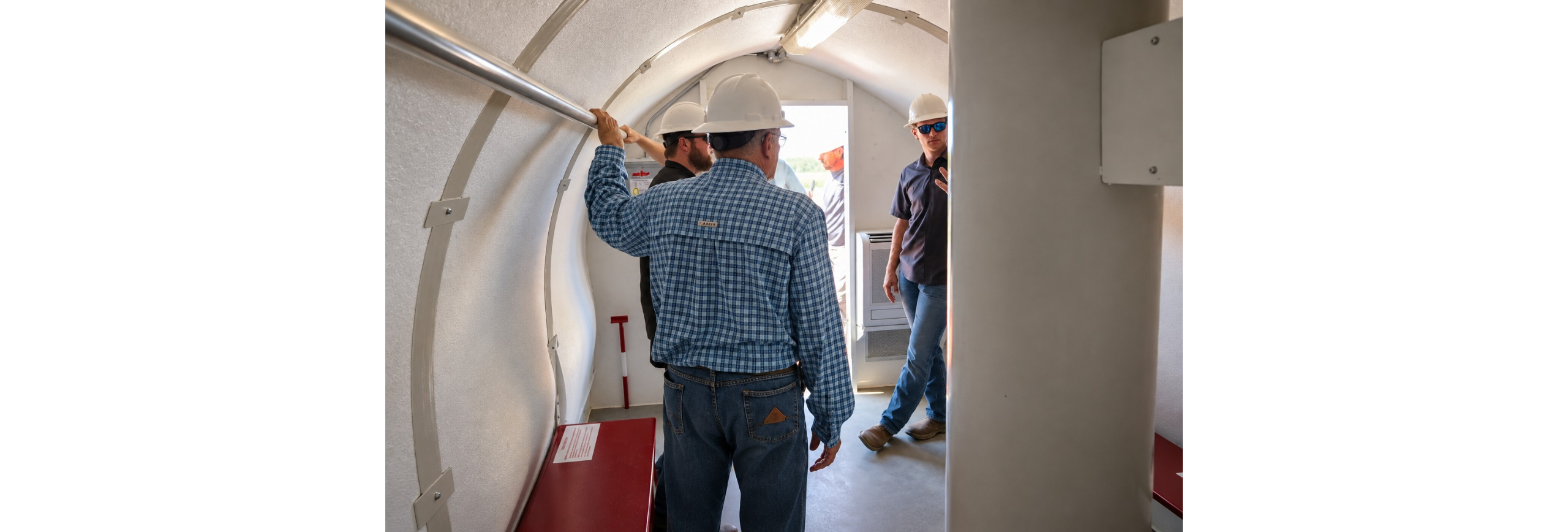
Distributed units shorten travel time compared with one central shelter at the far end of a site. Red Dog units spread easily across a project and place protection close to each crew. Each unit holds 32 occupants under the Federal Emergency Management Agency (FEMA) commercial standard of 5 square feet per person.
Next, assign roles before the drill, including a drill leader, route marshals, and shelter wardens. Additionally, choose whether to announce the drill or run it unannounced for a more realistic test. Review these construction safety meeting topics for severe weather to brief crews before drill day.
How Do You Lead a Drill for Tornado Safety in the Workplace?
Lead a drill for tornado safety in the workplace by sounding the alert, moving crews, and timing shelter entry. Wardens then take a headcount, confirm missing workers, and keep everyone inside until the all-clear signal. Finally, hold a short debrief, record results, and update your emergency action plan with lessons learned.
Run the Drill Step by Step
Clear sequencing keeps a drill focused and gives you reliable data on response times. Start the clock the moment the alert sounds, and stop it when the last door closes. Use the following sequence to keep every drill organized, realistic, and measurable for your safety team.
- Sound the alert: Trigger the siren and strobes so crews recognize the real warning signal.
- Stop work safely: Crews shut down equipment, secure loads, and move toward the nearest shelter.
- Enter and account: Wardens count occupants at the door and report missing workers to the leader.
- Hold and release: Occupants stay inside until the drill leader issues a clear, verified all-clear signal.
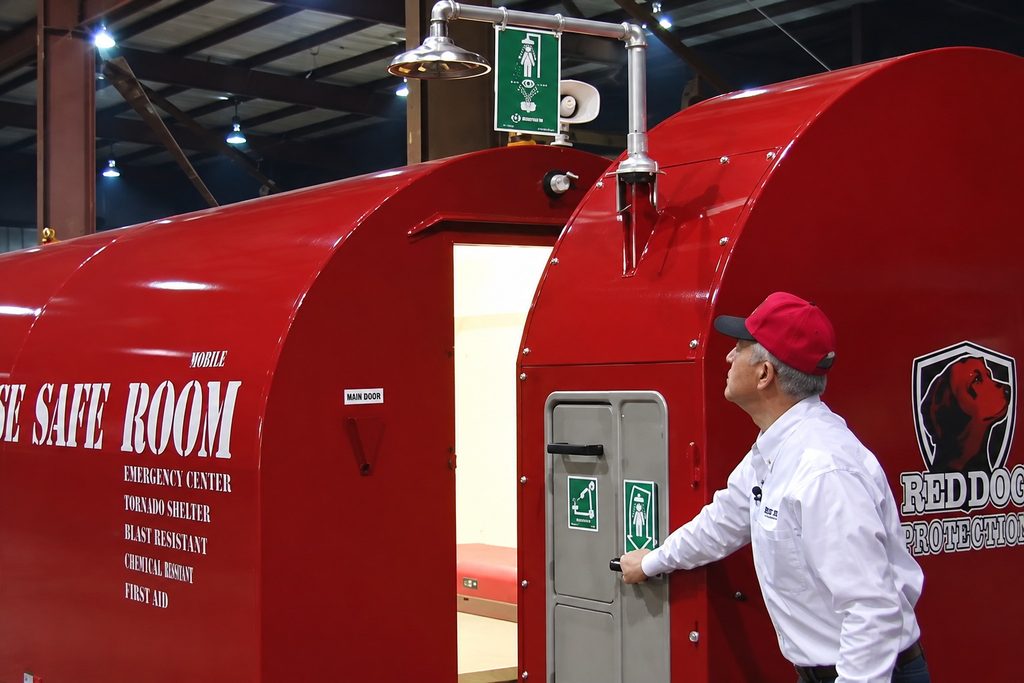
Red Dog units include a 128-decibel siren and strobe lights, which help crews hear alerts over machinery. As a result, drills reflect the same signals your workers will hear during a real warning.
Moreover, practice the drill during different shifts so night crews and new hires gain the same experience. Real tornado safety in the workplace accounts for weather, noise, and visibility, because storms rarely arrive conveniently. Strategic on-site safety stations can further improve response times across large or spread-out sites.
Measure Results and Improve Every Cycle
Every drill should end with a short debrief while details remain fresh in everyone’s mind. Ask crews what slowed them down, which signals they missed, and where routes felt unclear. Then compare entry times against your target and record every finding in one place.
Data from each drill guides placement decisions, especially on sites that change from month to month. For example, a crew that needs six minutes to reach shelter may need a closer unit. Red Dog can reposition units with a winch truck, or your team can move them with its own equipment.
Additionally, you can add units as headcount grows and reduce them as the project winds down. Shelters also serve as muster points and Faraday cages during lightning, so crews learn them well. Integrating drills into broader severe weather risk management keeps your program aligned with daily operations.
Regular drills turn tornado safety in the workplace into a habit rather than a once-a-year exercise. Ultimately, practiced crews respond faster and with far less confusion when real warnings arrive.
Strengthen Tornado Safety in the Workplace With Reliable Shelters
A drill only proves readiness when crews can reach certified protection quickly from every work zone. Therefore, pair a practiced plan with shelters placed close to the people who need them. Red Dog units deploy without foundations, so your shelter layout can change as fast as your site.
Our team can help you plan unit placement, scale coverage, and support drills across your project. Lease options vary with project length, so we tailor recommendations to your timeline and crew size. Reach out to Red Dog Shelters to build a drill program backed by protection your crew can trust.
Written in partnership with Tom White